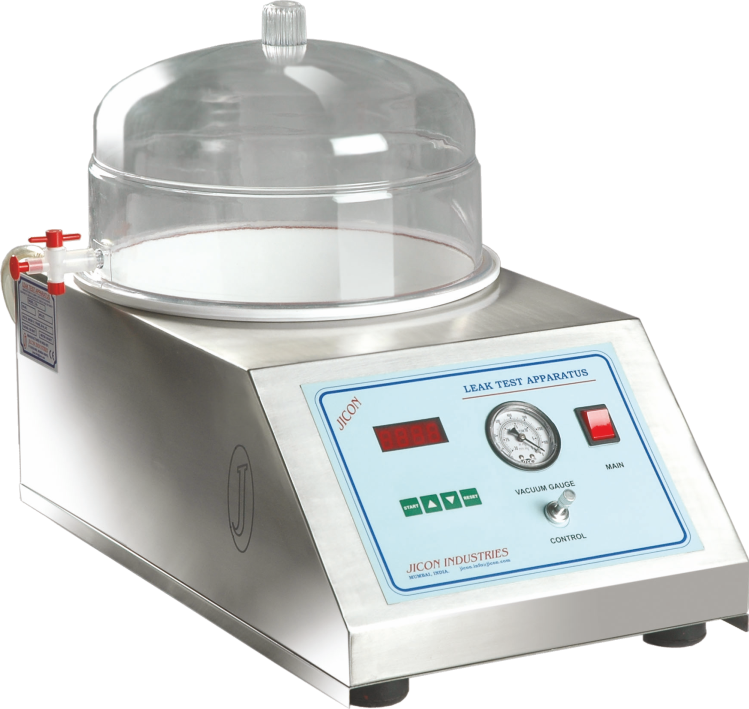
Leak test apparatus is an essential quality control instrument used in pharmaceutical manufacturing to verify the integrity of sealed packaging. In industries where product safety and packaging reliability are critical, the leak test apparatus plays a vital role in detecting microscopic leaks in blister packs, strip packs, sachets, and other sealed pharmaceutical containers.
Pharmaceutical manufacturers rely on the leak test apparatus to maintain product stability, prevent contamination, and ensure compliance with regulatory standards. Even a small leak in packaging can compromise product effectiveness, reduce shelf life, and expose the product to environmental contamination. For this reason, the leak test apparatus is widely used in quality control laboratories and production environments.

The leak test apparatus is designed to detect leaks using a vacuum-based testing method. This technique allows operators to observe the presence of air bubbles, which indicate leakage in sealed packaging.
In pharmaceutical manufacturing, packaging integrity directly impacts product safety and regulatory compliance. The leak test apparatus helps manufacturers identify defects before products reach the market.
Key advantages include:
Reliable detection of packaging leaks
Protection against contamination
Improved quality assurance
Compliance with pharmaceutical regulations
Enhanced consumer safety
By integrating a leak test apparatus into quality control procedures, pharmaceutical companies can maintain high standards in packaging verification.
The leak test apparatus operates using a vacuum chamber that allows inspection of sealed packaging under controlled conditions. The package under test is submerged in water inside the chamber. When vacuum pressure is applied, any leaks present in the package release air bubbles that become visible in the liquid.
This simple yet effective testing method ensures accurate detection of defects in blister packs, strip packs, and pouches. The leak test apparatus provides quick and repeatable results, making it ideal for routine quality inspection.
The vacuum system used in the leak test apparatus is designed to maintain consistent pressure levels during testing. This ensures reliable results across different packaging materials and formats.
The leak test apparatus manufactured for pharmaceutical applications includes several design features that ensure accuracy and reliability.
Important features include:
Transparent vacuum chamber for clear observation
Durable stainless steel construction
Vacuum gauge for pressure monitoring
Easy-to-operate control valves
Compact laboratory design
Reliable sealing mechanism
These features make the leak test apparatus suitable for routine quality control testing in pharmaceutical and packaging laboratories.
The leak test apparatus is used across various industries that require packaging integrity testing.
Typical applications include:
Pharmaceutical blister packaging inspection
Strip pack leak detection
Food packaging quality testing
Cosmetic product packaging validation
Medical device packaging integrity testing
In pharmaceutical production facilities, the leak test apparatus is commonly used in quality control labs to verify packaging before product release.
Pharmaceutical packaging must meet strict regulatory guidelines to ensure product safety. The leak test apparatus supports compliance with international quality standards.
Regulatory frameworks emphasize packaging integrity testing as a critical quality parameter. The leak test apparatus helps manufacturers maintain compliance with recognized industry standards.
For additional guidance on pharmaceutical packaging regulations, refer to:
https://www.who.int/teams/regulation-prequalification/gmp
https://www.fda.gov/drugs/pharmaceutical-quality-resources
These external resources provide authoritative guidance on pharmaceutical quality assurance practices.
The leak test apparatus offers operational simplicity while delivering dependable results. The system requires minimal setup and can be used repeatedly for batch testing.
Benefits include:
Fast testing cycles
Easy operator handling
Minimal maintenance requirements
Reliable leak detection performance
Because the leak test apparatus does not require complex electronics or software, it remains a dependable solution for routine laboratory testing.
The leak test apparatus is designed with robust materials to withstand continuous laboratory use. Stainless steel components ensure corrosion resistance and long-term durability.
The transparent chamber allows operators to visually monitor testing procedures and detect bubble formation quickly. This ergonomic design improves usability and ensures efficient quality control operations.